|
The Iberic mountains about 200 km north of Madrid have been a good place for observing the
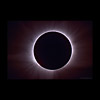
solar eclipse 2026 and the night sky. The probability
of clouds was higher at 1600 m height, but the temperature and transparency was much
better compared to the lower regions.
Measurements
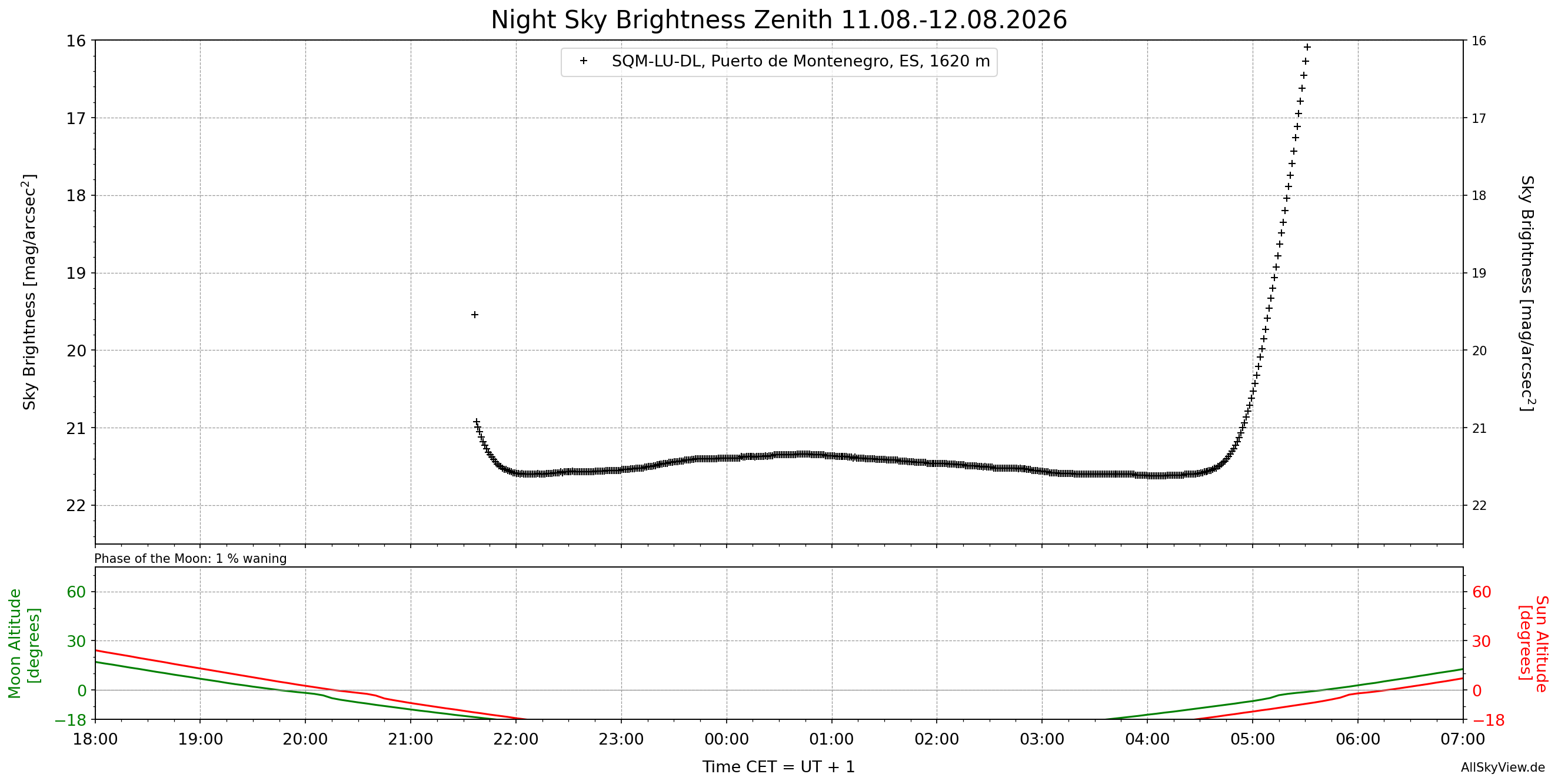
The brightness in the zenith was 21.43 mag/arcsec² at the time of the above image 0:34 CEST (22:34 UTC).
The values in the evening and mornig hours were darker with 21.60 mag/arcsecond² and 21.62 mag/arcsecond².
This is probably because of the bright milky way regions of Cygnus right in the zenit around 1 CEST. Only minor airglow
structures can be seen in the panoramic view. 21,60 mag/arcsecond² resembles a 0.4 mag/arcsecond² difference
to the natural 22 mag/arcsecond² brightness of a monnless sky. This gives a factor of 10^(0.4/2.5) = 1.45, therefore
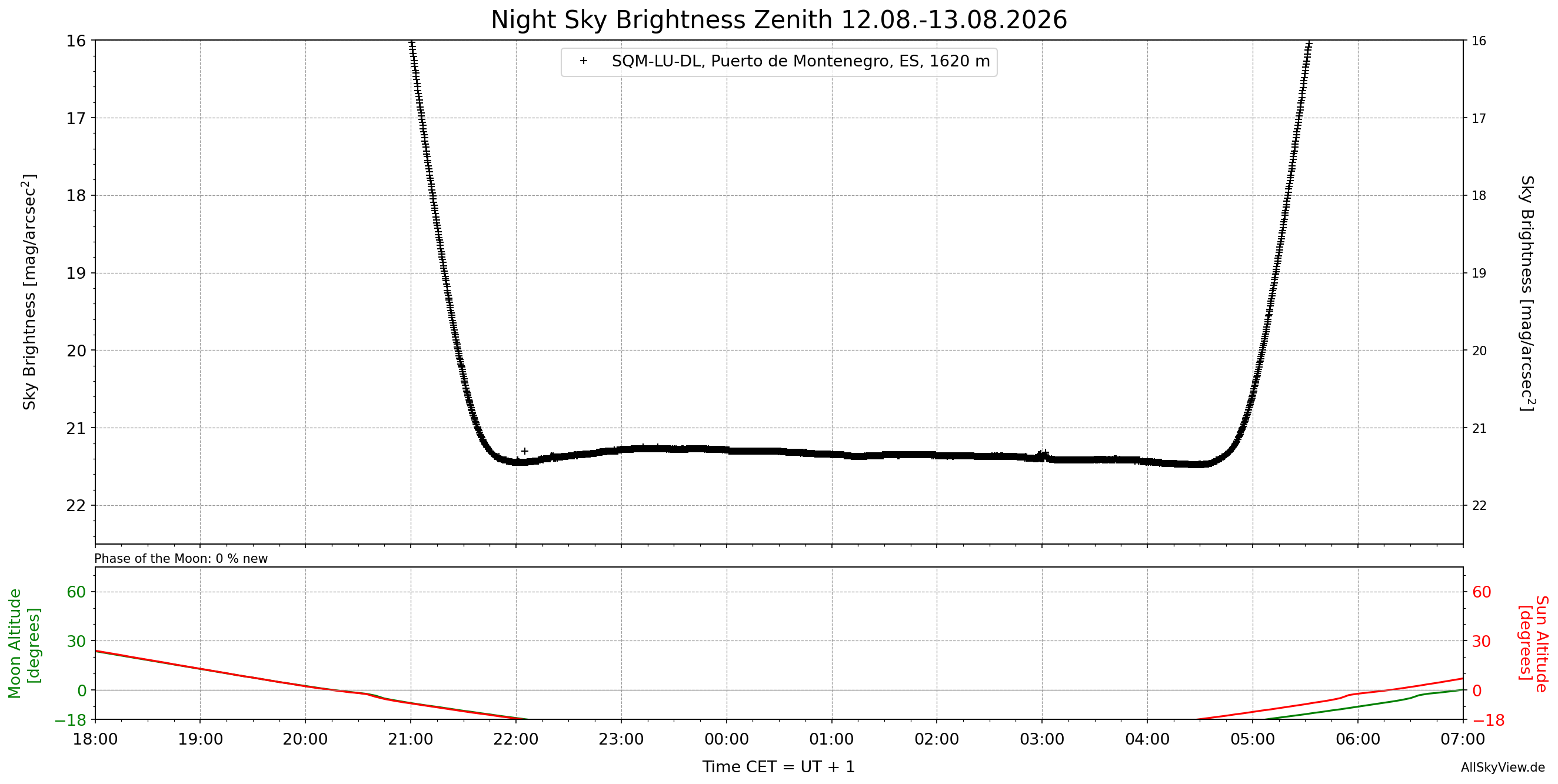
the zenith is 45 % more bright compared to a sky without light pollution. The following night had a similar path
with darkest values in the evening and morning, but it was a bit brighter over all. Probably the transparency was a bit
worse because of more aerosoles scattering the light pollution from the ground.
Brightness measurements were obtained every minute in the zenith direction with a SQM-LU-DL, serial number 2030.
The values of August 12th/13th were taken every 15 s to have a better sampling of the short solar eclipse.
|